
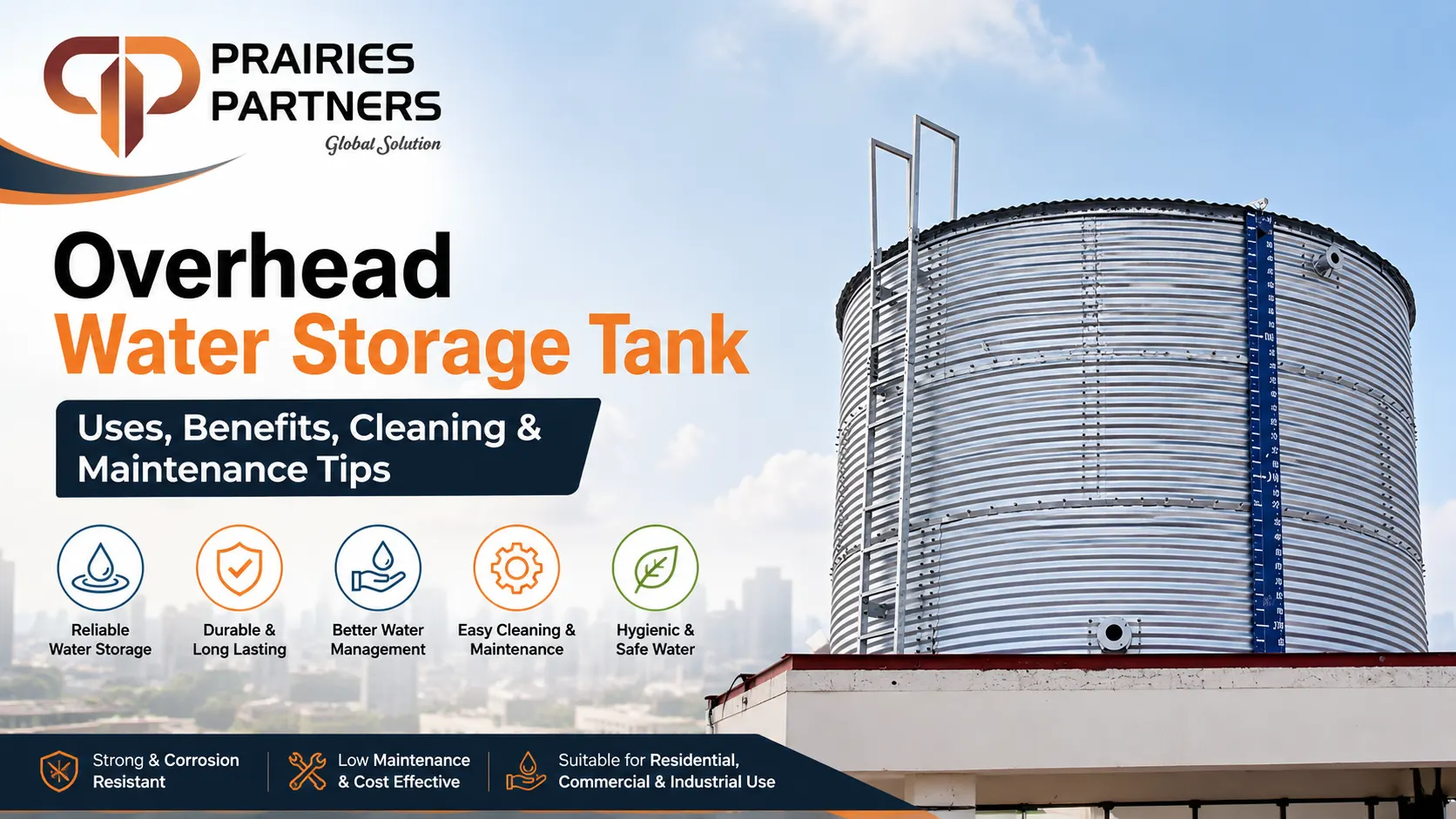
A reliable over head tank is an essential part of every residential, commercial, industrial, and agricultural water distribution system. It stores water at an elevated height, allowing gravity to supply water efficiently throughout the building or facility. A well-designed overhead water storage tank not only ensures an uninterrupted water supply but also helps maintain adequate water pressure for daily operations. Whether it is used for drinking water, industrial processes, irrigation, or fire protection, investing in a durable over head water tank is a smart long-term decision.
Prairies Partners is a trusted manufacturer of advanced water storage solutions. Our company continues to offer high-quality overhead water tanks that are engineered for strength, durability, and long-lasting performance. Designed with premium materials and modern manufacturing technology, these tanks provide reliable water storage for a wide range of applications.
What is Overhead Tank ?
The oht tank full form is Overhead Water Tank. An overhead tank is a water storage tank installed on an elevated platform or structure, allowing water to flow naturally through gravity without relying continuously on pumps.
An over head water tank is commonly installed on rooftops, steel structures, or RCC towers. These tanks are available in various capacities and are suitable for residential buildings, apartments, hospitals, schools, factories, hotels, shopping malls, and municipal water supply systems.
Common Uses of Overhead Water Tanks
An overhead tank serves multiple purposes across different industries and sectors. Its versatility makes it one of the most widely used water storage solutions.
Some common applications include:
- Residential homes and apartments
- Commercial buildings
- Hotels and restaurants
- Hospitals and healthcare facilities
- Educational institutions
- Industrial manufacturing units
- Warehouses
- Agricultural irrigation
Prairies Partners can offer customized storage solutions for each of these applications based on project requirements.
Benefits of Installing an Over Head Water Tank
Choosing a high-quality over head water tank offers several long-term benefits.
Reliable Water Supply
An overhead tank stores sufficient water to meet daily demand, ensuring continuous supply even during temporary interruptions.
Better Water Pressure
Since the over head tank is installed at an elevated height, gravity provides consistent water pressure without requiring continuous pump operation.
Energy Savings
Pumps are only required to fill the tank, reducing electricity consumption during normal water distribution.
Long Service Life
Modern over head water tank systems are manufactured using corrosion-resistant materials that ensure durability and long operational life.
Low Maintenance
A properly designed overhead tank requires minimal maintenance while providing dependable performance for many years.
How to Clean an Overhead Tank
Regular cleaning is essential to maintain water quality and extend the lifespan of an over head water tank.
Follow these simple cleaning steps:
Drain the Tank
Completely empty the overhead tank before beginning the cleaning process.
Remove Sediment
Use brushes or suitable cleaning equipment to remove dirt, algae, and sediment accumulated at the bottom.
Wash the Interior
Clean all internal surfaces using fresh water and approved cleaning solutions.
Disinfect the Tank
Apply a suitable disinfectant according to recommended safety guidelines to eliminate bacteria and microorganisms.
Rinse Thoroughly
Flush the over head tank multiple times with clean water until all cleaning agents are removed.
Inspect Before Refilling
Check for leaks, cracks, loose fittings, and damaged components before refilling the tank.
Regular cleaning helps maintain safe water quality while improving the efficiency of the storage system.
Maintenance Tips for Overhead Water Tanks
Routine maintenance keeps every overhead tank functioning efficiently for years.
Some useful maintenance practices include:
- Clean the tank every 6–12 months.
- Inspect the tank for cracks or leaks.
- Check inlet, outlet, and overflow pipes.
- Ensure the lid remains tightly closed.
- Remove accumulated sediment regularly.
- Inspect structural supports for corrosion or damage.
- Monitor water quality periodically.
- Repair minor issues immediately.
- Schedule professional inspections when required.
Following these maintenance practices significantly increases the service life of an over head water tank.
An over head tank plays a vital role in ensuring a continuous and efficient water supply for homes, businesses, industries, and public infrastructure. Understanding the oht tank full form, its uses, benefits, cleaning methods, and maintenance practices helps you maximize the performance and lifespan of your overhead tank. Whether you need a storage solution for residential, commercial, or industrial applications, Prairies Partners continues to offer high-quality over head water tank solutions that combine durability, efficiency, and long-term value for every water storage requirement.