
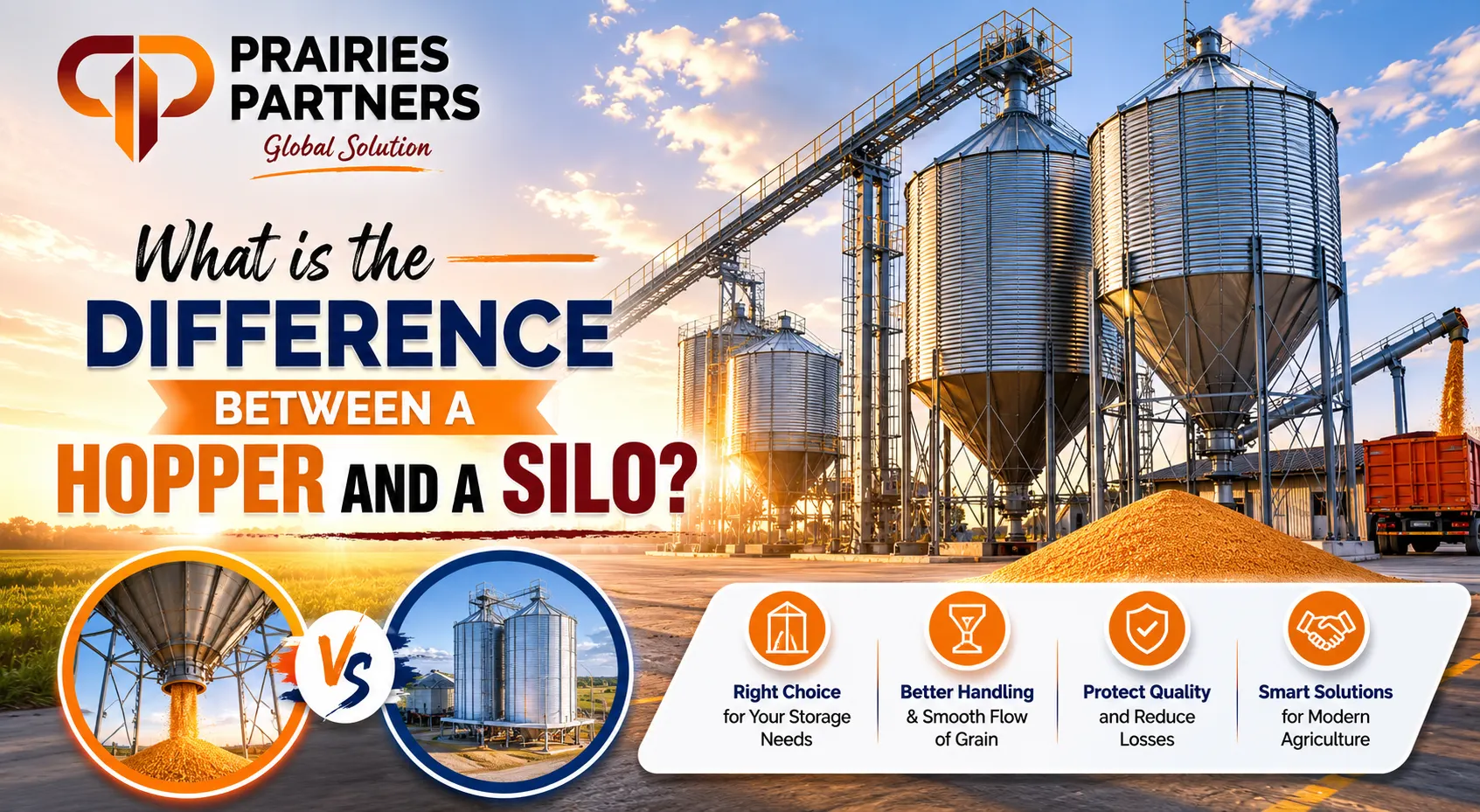
In the world of bulk material storage and handling, the terms hopper and silo are often used interchangeably. However, they serve different purposes and are designed for different stages of material management. Understanding the distinction between these structures is important for industries such as agriculture, food processing, manufacturing, and grain storage. Prairies Partner specializes in advanced storage solutions that offer reliable systems for efficient material handling, including silo and hopper-based storage designs.
Understanding a Silo
A silo is a large storage structure designed to hold bulk materials for an extended period. In agriculture, silos are commonly used to store grains such as wheat, rice, corn, barley, and soybeans. Silos protect stored materials from moisture, pests, weather conditions, and contamination while preserving product quality. Silos are generally built with large storage capacities and are intended for long-term storage.
Understanding a Hopper
A hopper is a smaller container or storage unit designed primarily for short-term material holding and controlled discharge. Unlike a silo, which focuses on storage, a hopper focuses on feeding materials into processing equipment, conveyors, packaging systems, or transportation units. Hoppers are usually funnel-shaped with sloped walls that allow materials to flow downward through gravity.
Hopper vs Silo: The Main Difference
When comparing hopper vs silo systems, the most significant difference lies in their function.
A silo is designed for storing large quantities of bulk materials over long periods, while a hopper is designed for temporary storage and controlled discharge of materials. Silos prioritize preservation and capacity, whereas hoppers prioritize material flow and operational efficiency.
Storage Capacity
One major difference between a hopper and a silo is storage capacity.
Silos are typically much larger and can store hundreds or even thousands of tons of grain or other bulk materials. Their design focuses on maximizing storage volume while maintaining product quality.
Hoppers, on the other hand, are generally smaller and intended to hold materials temporarily before the next stage of processing or handling.
Material Flow Characteristics
Another important distinction in the hopper vs silo comparison is material flow.
Silos are built primarily to store products safely. Material movement within the silo is usually minimal until unloading begins.
Hoppers are specifically engineered to promote continuous material flow. Their sloped walls and discharge openings ensure that products move efficiently toward conveyors, feeders, or processing equipment.
Key Differences Between Hopper and Silo
Let’s compare hopper and silo side-by-side to understand the core differences:
|
Feature |
Silo |
Hopper |
|
Purpose |
Long-term bulk storage |
Short-term holding and flow control |
|
Shape |
Tall, cylindrical |
Cone or funnel shaped |
|
Capacity |
Very large (tons) |
Small to medium |
|
Material Handling |
Stores large quantity |
Releases material in measured flow |
|
Placement |
Built on ground or structure |
Usually under silos or machines |
|
Discharge Control |
With the help of hopper or gates |
Controlled and smooth discharge |
|
Material Type |
Grains, powders, plastic, etc. |
Same, but in smaller quantity |
|
Construction |
Requires strong foundation |
Compact, easy to install |
What is a Hopper Silo?
A Hopper Silo combines the storage benefits of a silo with the discharge advantages of a hopper. Instead of having a flat bottom, this type of silo features a conical hopper-shaped bottom that allows materials to flow out naturally through gravity. This design eliminates the need for extensive unloading equipment and makes grain discharge faster and more efficient.
Benefits of Hopper Bottom Silos
Some key benefits of hopper bottom Silos include:
- Efficient Grain Discharge: The hopper-shaped bottom allows grain to flow naturally, reducing unloading time and improving productivity.
- Reduced Maintenance: Because grain empties more completely, there is less residue left inside the silo, resulting in lower cleaning and maintenance requirements.
- Better Grain Quality: Improved airflow and efficient unloading help maintain grain quality during storage.
- Lower Labor Costs: Automated discharge systems reduce the need for manual grain handling.
- Increased Operational Efficiency: Farmers and grain storage operators can manage inventory more effectively with hopper-based unloading systems.
Why Choose Prairies Partner?
Prairies Partner understands the importance of efficient storage and material handling. Our company continues to offer high-quality silo systems, hopper solutions, and customized storage infrastructure designed to meet the needs of modern agricultural and industrial operations.
With a focus on durability, efficiency, and performance, Prairies Partner helps businesses maximize storage capacity while ensuring smooth material flow throughout their operations.
Understanding the difference between a hopper and a silo is essential when selecting the right storage solution. In a hopper vs silo comparison, silos are primarily designed for long-term bulk storage, while hoppers focus on short-term holding and controlled material discharge. A Hopper Silo combines both functions by providing large storage capacity with efficient unloading capabilities. Modern hopper bottom Silos have become increasingly popular because they simplify grain handling, improve operational efficiency, and help preserve product quality. Choosing the right system depends on your storage requirements, material handling needs, and operational goals.