
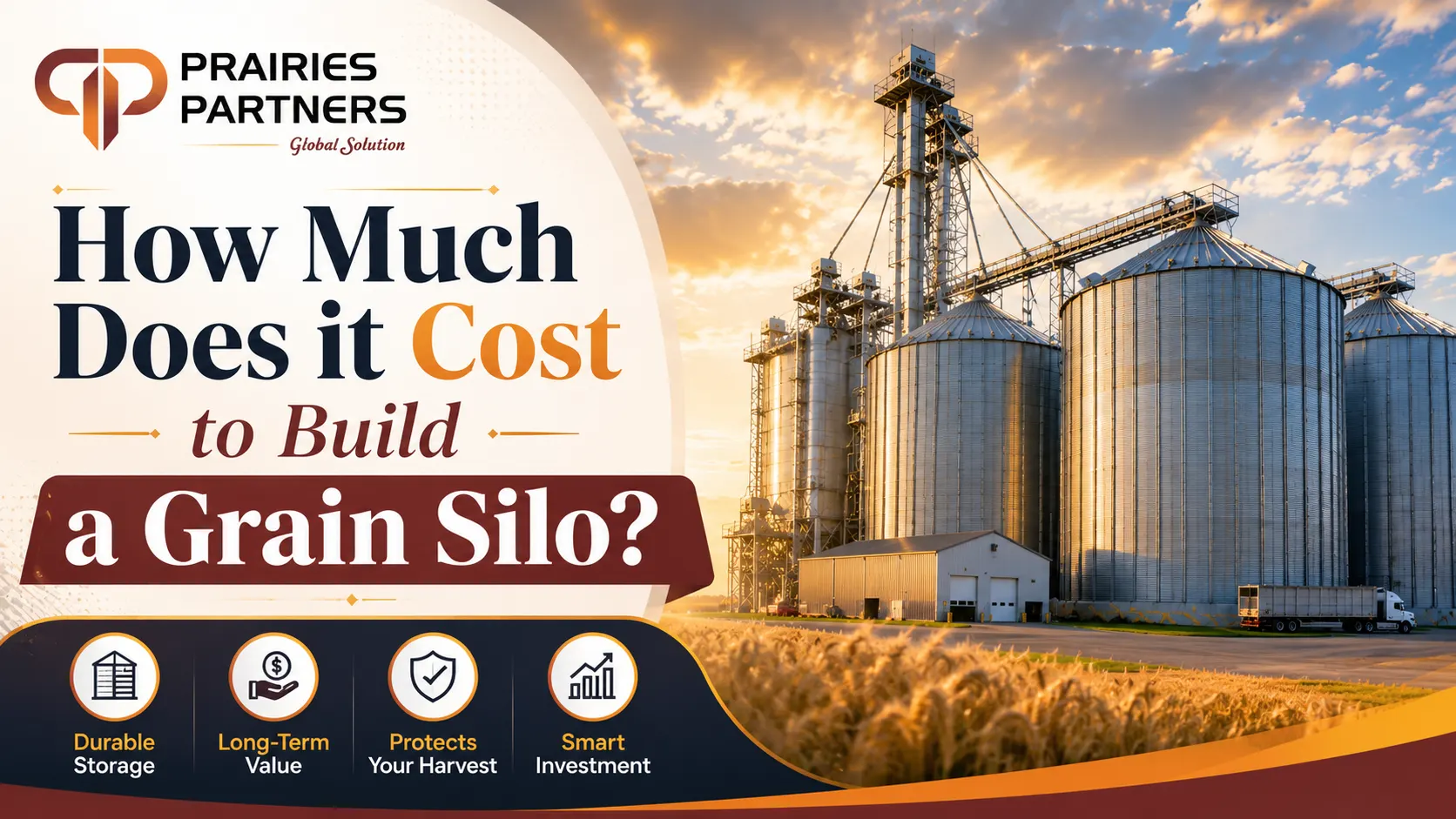
Prairies Partners understands that efficient grain storage is one of the most important investments for farmers, grain handlers, and agricultural businesses. A Grain Silo is designed to protect harvested crops from moisture, pests, and environmental damage while ensuring long-term storage efficiency. While the initial investment can seem significant, the long-term benefits often outweigh the costs through reduced grain losses and improved inventory management.
What Determines the Cost of a Grain Silo?
The cost of a silo is not fixed because every storage project has unique requirements. Small storage silos for farms require less investment than large commercial grain storage systems.
The overall price generally depends on:
- Storage capacity
- Type of grain being stored
- Construction material
- Foundation requirements
- Roof design
- Aeration system
- Loading and unloading equipment
Prairies Partners offer customized grain silo solutions that are designed according to your storage capacity and operational needs.
How Much Do Silos Cost for Different Applications?
- Small Farm Silos: Small agricultural silos are ideal for family farms and medium-sized operations. They typically require lower construction costs and are easier to maintain.
- Commercial Grain Storage Silos: Commercial facilities often need larger storage capacities and advanced grain management systems. These projects involve greater investment but also support higher storage volumes and operational efficiency.
- Industrial Storage Silos: Industrial silos used for bulk commodities may require specialized designs, additional safety systems, and customized engineering solutions, resulting in higher overall costs.
The larger the storage requirement, the greater the investment needed for construction, equipment, and ongoing maintenance.
How Much Does a Silo Cost?
The cost of a silo depends mainly on its size and construction specifications. A small silo intended for limited farm storage will naturally require a smaller investment than a large commercial silo designed to store hundreds or thousands of tones of grain.
Some of the major factors affecting the final grain silo price include:
- Storage capacity
- Silo diameter and height
- Construction material
- Steel thickness and quality
- Foundation requirements
- Aeration system
- Temperature monitoring
- Grain loading and unloading equipment
For this reason, there is no single price that applies to every grain silo. A detailed quotation should be prepared after understanding the required capacity and project conditions.
Grain Silo Price Based on Capacity
One of the biggest factors affecting the grain silo price is storage capacity. Larger silos require more steel, stronger foundations, and additional structural support, increasing the overall investment.
Typical storage options include:
- Small farm silos
- Medium-capacity agricultural silos
- Commercial grain storage silos
- Large industrial grain storage facilities
Choosing the correct capacity ensures efficient storage while avoiding unnecessary investment in oversized systems.
Major Factors That Influence Grain Silo Price
1. Storage Capacity
Capacity is one of the biggest factors affecting the grain silo price. Increasing the storage capacity generally means using more material and providing a larger supporting structure.
2. Material and Construction
Galvanized steel is commonly used for grain storage because it provides durability and resistance to environmental conditions. The thickness and quality of the material can influence the overall silo cost.
3. Aeration System
Proper aeration helps maintain suitable grain conditions during storage. Depending on the silo size and grain type, fans, ducts, and other aeration components may be required.
4. Grain Handling Equipment
A complete facility may require conveyors, elevators, loading systems, discharge equipment, and other machinery. These additions increase the total cost of a silo but can make grain handling faster and more efficient.
5. Foundation and Installation
A silo requires a properly engineered foundation to support its weight and the stored grain. Ground conditions, civil work, transportation, and installation can all contribute to the final project cost.
6. Monitoring and Automation
Modern grain storage facilities may include temperature sensors, moisture monitoring, alarms, and automated controls. These features can increase the initial investment but provide better control over stored grain.
Why Choose Prairies Partners?
Prairies Partners continues to offer innovative grain storage solutions tailored to the needs of modern agriculture. With expertise in silo design, engineering, and installation, our company helps clients develop reliable storage systems that maximize efficiency and protect valuable harvests. Our commitment to quality, performance, and customer satisfaction ensures that each silo delivers long-lasting value and dependable storage solutions.
While the exact cost of a silo varies from project to project, investing in a high-quality grain storage solution can deliver significant long-term benefits. By partnering with experienced providers such as Prairies Partners, agricultural businesses can secure efficient, durable, and cost-effective grain storage systems.