
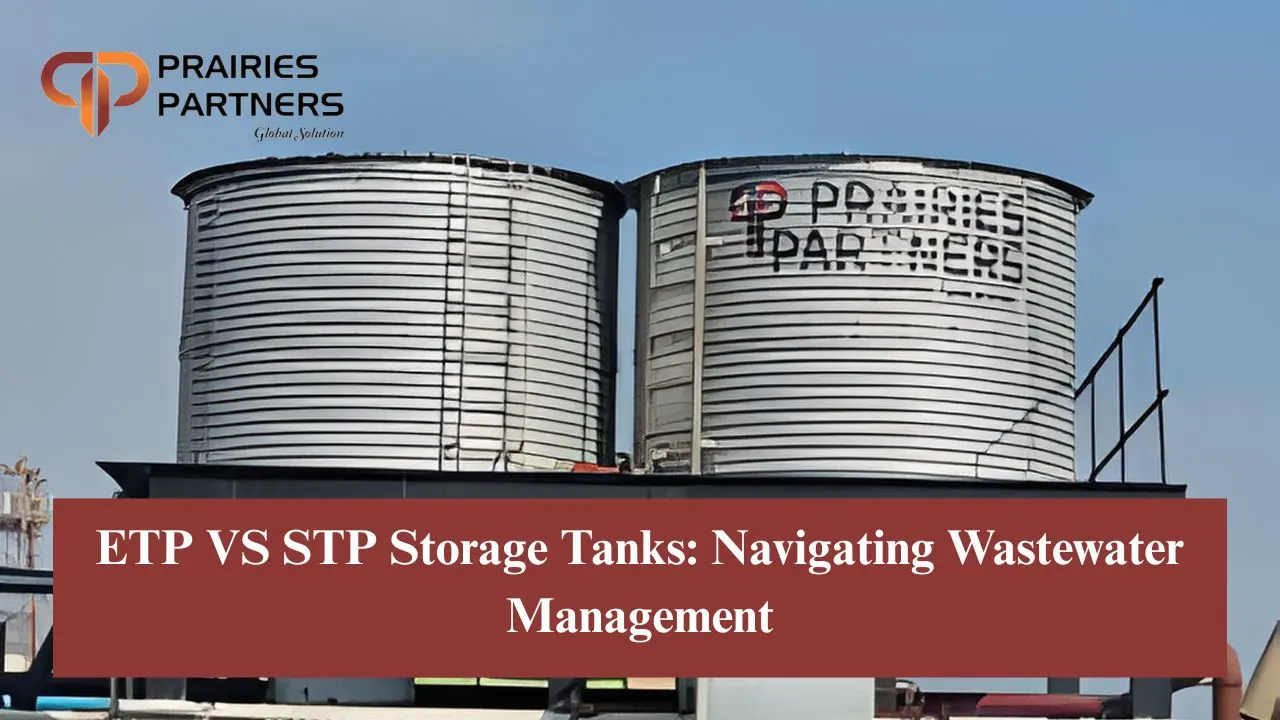
Prairies Partners understands that effective wastewater management is not just a regulatory requirement—it is a responsibility toward the environment and future generations. In today’s rapidly industrializing and urbanizing world, managing wastewater efficiently has become essential. One of the most common discussions in this field revolves around ETP VS STP storage tanks associated with them. To begin with clarity, let’s understand the full form. STP stands for Sewage Treatment Plant, and ETP stands for Effluent Treatment Plant. Both systems treat wastewater, but their applications and processes differ significantly.
When industries and residential complexes evaluate stp and etp, the focus often goes beyond treatment technology to include durable and reliable storage tanks. These tanks are critical for holding untreated wastewater, treated water, sludge, or recycled water. Prairies Partners specializes in designing and manufacturing high-quality storage solutions that provide long-term performance, corrosion resistance, and operational efficiency.
STP Storage Tanks
An STP, or Sewage Treatment Plant, primarily treats domestic wastewater generated from households, apartments, hotels, hospitals, and commercial complexes. The purpose of STP systems is to remove organic matter, suspended solids, and harmful microorganisms before the water is reused or discharged safely. STP storage tanks are used at different stages of the process—collection tanks, aeration tanks, settling tanks, and treated water tanks.
ETP Storage Tanks
An ETP, or Effluent Treatment Plant, is mainly used in industries where wastewater contains chemicals, toxic substances, oils, heavy metals, or non-biodegradable pollutants. Industries such as pharmaceuticals, textiles, chemicals, food processing, and manufacturing rely heavily on etp water treatment systems to comply with environmental regulations. Materials used in ETP tanks often require superior corrosion resistance and structural reinforcement.
Also Read : Why is Aeration Tank Important for Wastewater Treatment?
Key Differences Between ETP and STP Storage Tanks
When comparing etp stp, it is essential to look at specific factors:
- Nature of Wastewater: STP tanks manage domestic sewage, while ETP tanks deal with industrial effluents that may contain hazardous substances.
- Material Requirements: ETP storage tanks often require higher chemical resistance due to the demands of etp water treatment, whereas STP tanks focus more on biological treatment processes.
- Treatment Complexity: In an etp stp plant, ETP processes are generally more complex, involving chemical treatment, neutralization, and advanced filtration systems.
- Regulatory Standards: Both systems must comply with environmental norms, but industrial discharge regulations for ETP systems are often stricter.
Prairies Partners provide storage tank solutions that align with these specific requirements, ensuring compliance and operational reliability.
STP Storage Tank vs ETP Storage Tank
| Basis of Comparison | STP Storage Tank | ETP Storage Tank |
|---|---|---|
| 1. Full Form | Sewage Treatment Plant | Effluent Treatment Plant |
| 2. Type of Wastewater | Domestic sewage (bathroom, kitchen, toilet waste) | Industrial effluents (chemicals, oils, heavy metals) |
| 3. Main Treatment Process | Mostly biological treatment | Chemical, physical & biological treatment |
| 4. Chemical Resistance | Moderate resistance required | High chemical & corrosion resistance required |
| 5. Application Area | Residential, hotels, hospitals, commercial buildings | Factories, pharma, textile, chemical industries |
Why is an ETP Tank Needed?
- Safe Storage of Industrial Effluents: An ETP tank safely stores wastewater generated from industrial processes before it undergoes treatment.
- Handling Hazardous Chemicals: In etp water treatment, wastewater may contain harmful chemicals, oils, and heavy metals. ETP tanks are designed to withstand such corrosive substances.
- Process Equalization: ETP tanks help balance fluctuations in flow rate and pollutant concentration, ensuring smooth operation of the etp stp plant.
Advantages of STP Tank
- Effective Sewage Treatment: An STP tank efficiently stores and treats domestic wastewater, reducing pollutants before discharge or reuse.
- Environmental Protection: It prevents untreated sewage from contaminating soil, rivers, and groundwater.
- Supports Water Reuse: Treated water from the STP tank can be reused for gardening, flushing, or cooling purposes.
- Odor Control: Properly designed STP tanks minimize foul smells and maintain hygienic surroundings.
- Regulatory Compliance: Helps residential and commercial properties meet environmental and municipal norms.
Why Choose Prairies Partners?
- Industry Expertise: Prairies Partners has deep knowledge and experience in wastewater management solutions.
- High-Quality Products: We offer robust, durable, and corrosion-resistant tanks suitable for stp and etp systems.
- Custom Solutions: Our team tailors storage tanks and system designs to match specific site requirements and wastewater characteristics.
- Regulatory Compliance Support: We ensure products comply with environmental and municipal wastewater treatment standards.
- Reliable After-Sales Service: Prairies Partners provide prompt support, maintenance guidance, and technical assistance.
Navigating wastewater management requires a clear understanding of stp etp full form, the differences between stp and etp, and the technical demands of each system. While STP systems handle domestic sewage, ETP systems focus on industrial wastewater through advanced etp water treatment processes. Both require robust and durable storage tanks to ensure safe and efficient operations.
Prairies Partners stand as a trusted name in delivering storage tank solutions that provide performance, compliance, and sustainability. Whether you are setting up a new etp stp plant or upgrading an existing one, choosing the right storage tanks is a crucial step toward responsible wastewater management and environmental protection.
