In many industries, water quality plays a critical role in maintaining production efficiency and equipment performance. One of the most commonly used purified water types is demineralized water, which is widely used in power plants, pharmaceuticals, laboratories, chemical industries, and manufacturing facilities.
Industries depend on high-purity water because normal water contains dissolved minerals, salts, and impurities that may damage machinery or affect production quality. Proper storage of purified water is equally important to maintain its purity and prevent contamination. This is why selecting the right storage tank becomes essential for industrial operations.
What is Demineralised Water?
Demineralised water is water that has had most of its dissolved minerals and salts removed through specialized purification processes. Minerals such as calcium, magnesium, sodium, chloride, sulfate, and iron are eliminated to produce highly purified water.
The purification process generally uses ion exchange systems, reverse osmosis, or mixed bed deionizers. These systems remove unwanted ions from the water, making it suitable for industrial and technical applications where mineral-free water is required.
Why Proper Storage of DM Water Matters
Demineralized water is highly reactive because it lacks minerals. This means it can easily absorb impurities from its surroundings if not stored correctly. Using ordinary storage tanks can lead to contamination, which defeats the purpose of purification.
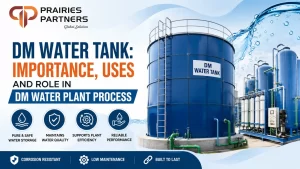
A specially designed DM Water Tank ensures that the water remains pure and free from external contaminants. These tanks are built using materials that do not react with water, maintaining its chemical stability. Prairies Partner understands these challenges and continues to offer high-quality storage solutions tailored to industrial needs.
Also Read : ETP VS STP Storage Tanks: Navigating Wastewater Management
Importance of Demineralized Water in Industries
- Prevents Scale Formation: Demineralised water is the prevention of scale buildup in industrial equipment. Minerals present in untreated water can accumulate inside boilers, pipelines, and heat exchangers, reducing efficiency and increasing maintenance costs.
- Improves Equipment Life: Industries use purified water to protect sensitive machinery from corrosion and mineral damage. water helps improve equipment performance and extends operational life.
- Supports High-Quality Production: In industries such as pharmaceuticals, electronics, and food processing, water purity directly affects product quality. Using demineralized water ensures cleaner and more consistent manufacturing processes.
- Reduces Maintenance Costs: Mineral deposits and contamination can lead to equipment failure and frequent repairs. By using purified water, industries can reduce downtime and maintenance expenses.
Applications of Demineralised Water
- Power Plants: Power plants use demineralised water in boilers and steam generation systems. Mineral-free water prevents scaling and improves thermal efficiency.
- Pharmaceutical Industry: Pharmaceutical companies require high-purity water for medicine manufacturing and laboratory applications. Demineralized water helps maintain product safety and compliance with quality standards.
- Chemical Industry: Many chemical processes require purified water to avoid unwanted reactions caused by dissolved minerals.
- Food and Beverage Industry: Food processing industries use purified water to maintain hygiene and improve product quality.
- Laboratories and Electronics: Laboratories and electronics manufacturing units use demineralised water for cleaning, testing, and precision applications where contamination must be avoided.
Which Tanks Are Used for Demineralized Water Storage?
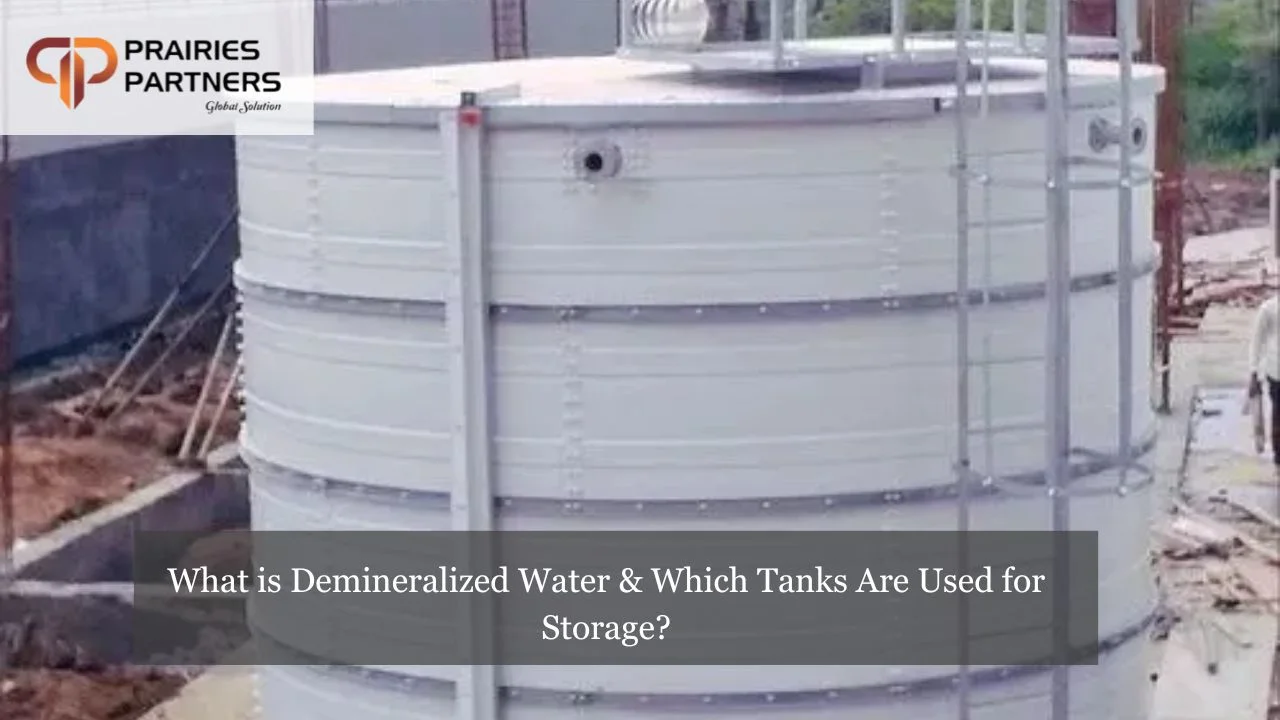
Proper storage is important because purified water can easily absorb contaminants if stored incorrectly. Industries use specially designed tanks to maintain water quality and purity.
- Stainless Steel Tanks: Stainless steel tanks are commonly used for storing demineralised water because they are corrosion-resistant and highly durable. These tanks maintain water purity and are suitable for pharmaceutical, food, and chemical industries.
- FRP Tanks: FRP (Fiber Reinforced Plastic) tanks are lightweight, corrosion-resistant, and cost-effective. Many industries prefer FRP tanks for storing purified water due to their durability and low maintenance requirements.
- HDPE Tanks: HDPE tanks are widely used for industrial water storage because they resist chemical reactions and corrosion. These tanks are suitable for handling demineralized water safely.
- Polypropylene Tanks: Polypropylene tanks provide excellent chemical resistance and are commonly used in water treatment plants and chemical industries.
- Customized Industrial Storage Tanks: Some industries require customized storage solutions based on capacity, temperature, and operational conditions. Prairies Partners offer specially designed storage systems that meet industrial requirements efficiently.
Understanding what is demineralised water is important for industries that depend on high-purity water for critical operations. By removing dissolved minerals and impurities, demineralized water improves equipment efficiency, product quality, and operational reliability.
However, proper storage is equally important to maintain purity and prevent contamination. Tanks made from stainless steel, FRP, HDPE, and polypropylene are commonly used for safe storage of demineralized water. Prairies Partners continues to provide efficient water treatment and storage systems that help industries achieve better productivity and long-term performance.