
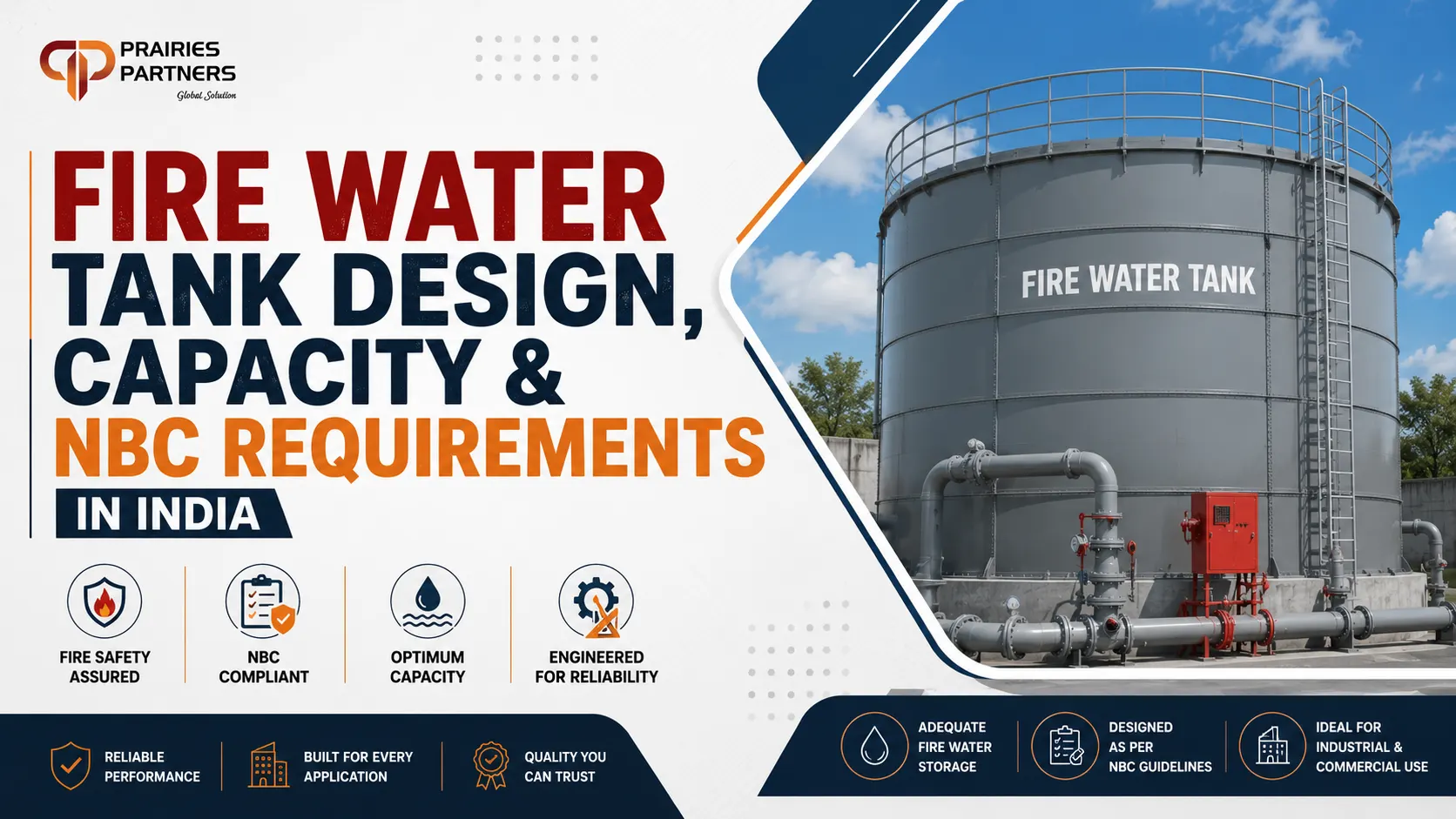
Fire protection is one of the most critical safety requirements for residential, commercial, industrial, and institutional buildings. A properly designed fire water tank ensures that an adequate water supply is available during emergencies, helping firefighting systems operate effectively when every second matters. In India, fire water storage systems must comply with the guidelines outlined in the National Building Code (NBC) to ensure safety and regulatory compliance.
Prairies Partners specializes in water storage and fire protection solutions. We offer and provide high-quality fire storage systems designed to meet project requirements, industry standards, and NBC regulations across various sectors.
What is a Fire Water Tank?
A Fire Water Tank is a dedicated storage tank designed to hold water exclusively for firefighting purposes. A fire tank remains reserved for emergency situations and supplies water to hydrants, sprinkler systems, hose reels, and firefighting pumps.
The primary purpose of a fire tank is to ensure a continuous and reliable water supply during a fire incident. In many buildings and industrial facilities, municipal water supply alone may not be sufficient to handle firefighting demands. Therefore, dedicated fire water storage becomes essential.
Importance of Fire Water Tanks
A well-designed fire protection system relies heavily on adequate water storage. Fire water tanks play a crucial role in maintaining emergency preparedness and protecting life and property.
Major benefits include:
- Immediate water availability during emergencies
- Continuous supply to hydrant and sprinkler systems
- Compliance with NBC and local fire regulations
- Enhanced building safety
- Protection of valuable assets
- Reduced risk of fire damage
- Improved emergency response capability
Because of these benefits, fire water storage tanks are mandatory in many commercial, industrial, and high-rise developments.
Fire Water Tank Design Considerations
Designing a fire water tank requires careful planning to ensure an adequate and reliable water supply during emergencies. Several important factors must be considered when determining the ideal fire water tank design.
- Required Storage Capacity: The first consideration is the amount of water needed for firefighting. Tank capacity depends on factors such as building type, occupancy, fire load, floor area, and local fire safety requirements.
- Tank Material Selection: The choice of construction material directly affects durability and maintenance. Fire water tanks are commonly manufactured using reinforced concrete (RCC), mild steel (MS), stainless steel (SS), or FRP.
- Structural Strength and Safety: A fire water tank must be designed to handle water pressure, wind loads, seismic activity, and other structural stresses.
- Accessibility and Maintenance: The design should include manholes, access ladders, overflow pipes, vents, and drainage arrangements. These features make inspection, cleaning, and maintenance easier while ensuring the tank remains operational at all times.
- Pump and Fire System Integration: The tank should be properly connected to fire pumps, hydrants, and sprinkler systems. Efficient piping layouts and pump arrangements ensure quick water delivery during emergencies.
By considering these design factors, organizations can ensure a dependable fire water storage system that provides maximum safety and effective firefighting support when needed most.
Typical Fire Water Tank Capacities
The required capacity of a fire tank varies from project to project. Some common applications include:
- Residential Buildings: Apartment complexes and residential towers often require dedicated fire water storage connected to hydrants and sprinkler systems.
- Commercial Buildings: Shopping malls, office complexes, hotels, and educational institutions generally require larger storage capacities due to higher occupancy levels.
- Industrial Facilities: Factories, warehouses, manufacturing units, and chemical plants frequently need substantial fire water reserves to manage potential fire hazards.
- Hospitals and Public Infrastructure: Healthcare facilities and public buildings require reliable emergency water storage to maintain life safety standards.
Selecting the correct capacity is one of the most important aspects of fire water tank design and should always be based on applicable codes and professional engineering assessment.
NBC Requirements for Fire Water Tanks in India
The National Building Code (NBC) of India provides guidelines regarding fire protection systems and water storage requirements.
NBC recommendations generally consider factors such as:
- Building height
- Occupancy type
- Fire hazard classification
- Sprinkler installation
- Hydrant system requirements
The code specifies minimum water storage capacities required for firefighting purposes depending on the nature of the building and associated risks.
Components of a Fire Water Storage System
A complete fire protection water storage system typically includes:
- Fire Water Tank: Stores the required emergency water reserve.
- Fire Pumps: Transfer water from the storage tank to firefighting systems.
- Hydrant Network: Provides water outlets for firefighting personnel.
- Sprinkler Systems: Automatically control fires by discharging water when activated.
- Control Valves and Piping: Regulate water flow throughout the fire protection network.
All these components work together to create an effective firefighting infrastructure.
Why Choose Prairies Partners?
When it comes to fire protection infrastructure, selecting the right engineering partner is crucial. Prairies Partners has extensive experience in designing and delivering reliable water storage solutions for various applications.
We offer:
- Customized fire storage solutions
- High-quality tank fabrication
- NBC-compliant designs
- Durable construction materials
Our team focuses on delivering safe, efficient, and dependable fire protection systems tailored to project requirements.
A properly engineered fire water tank is a critical component of any fire protection system. From ensuring adequate emergency water supply to supporting hydrants and sprinkler networks, these systems play a vital role in safeguarding lives and property. Effective fire water tank design combined with compliance to NBC requirements helps buildings and industries maintain the highest safety standards.
Whether for residential, commercial, or industrial applications, fire water tanks provide dependable emergency preparedness and regulatory compliance. Prairies Partners continues to offer high-quality fire protection storage solutions designed to meet modern safety requirements while ensuring long-lasting performance and reliability.